

Sourcing Salt from Türkiye: Production, Quality and Shipping
Sourcing salt from Türkiye gives European buyers lake salt, rock salt and vacuum salt from one supply base.
This guide comes from a salt producer, not a directory. It covers resources, grades, certificates, packing and paperwork.
Where terms depend on your contract, we say so. Prices, lead times and ports are agreed per enquiry.
Türkiye combines large-scale solar lake salt production at Lake Tuz with rock salt deposits across central Anatolia. Importers can source raw, washed, refined, food, industrial, water treatment and road salt from one origin, shipped as loose bulk, in big bags or in containers, with certificates of analysis and origin documents to support import.
Why European buyers source salt from Türkiye
Importers usually add salt from Türkiye for one or more of four reasons:
- Resource depth: large solar lake salt output plus rock salt deposits in several central Anatolian provinces.
- Range from one origin: raw, washed, refined, food, industrial, water treatment and road salt.
- Trade framework: the EU–Türkiye customs union covers industrial products, and the UK has its own trade agreement with Türkiye.
- Supply resilience: a second origin reduces dependence on a single mine, region or winter.
Directories list many salt companies. A shortlist rests on each producer’s sources, grades and documents.
Many buyers who search for salt suppliers UK-wide end up comparing stockists with direct supply from salt producers.
Turkish salt is one such route. The sections below show what to check before you place a first order.
Three questions separate producers from traders quickly:
- Does the company own the mine, lake works or plant that the salt comes from?
- Can it show certificates of analysis from recent lots of the grade you need?
- Can it pack and ship in the format and volume your site can receive?
Türkiye’s salt resources: Lake Tuz and rock salt deposits
Türkiye’s General Directorate of Mineral Research and Exploration (MTA) names four salt sources.
They are seawater, lake water, rock salt and spring water. MTA credits salt lakes with most of the country’s output.
Lake Tuz (Tuz Gölü)
Lake Tuz (Tuz Gölü) is Türkiye’s second-largest lake and one of the saltiest in the world, at about 1,665 km².
It lies where Ankara, Konya and Aksaray provinces meet. Its average depth is only about 1.5 m.
By the end of summer, the salt crust on the lake is thicker than 30 cm.
The lake is a Special Environmental Protection Area (since 2000), a Class A wetland and a flamingo breeding ground.
It is also on UNESCO’s World Heritage Tentative List.
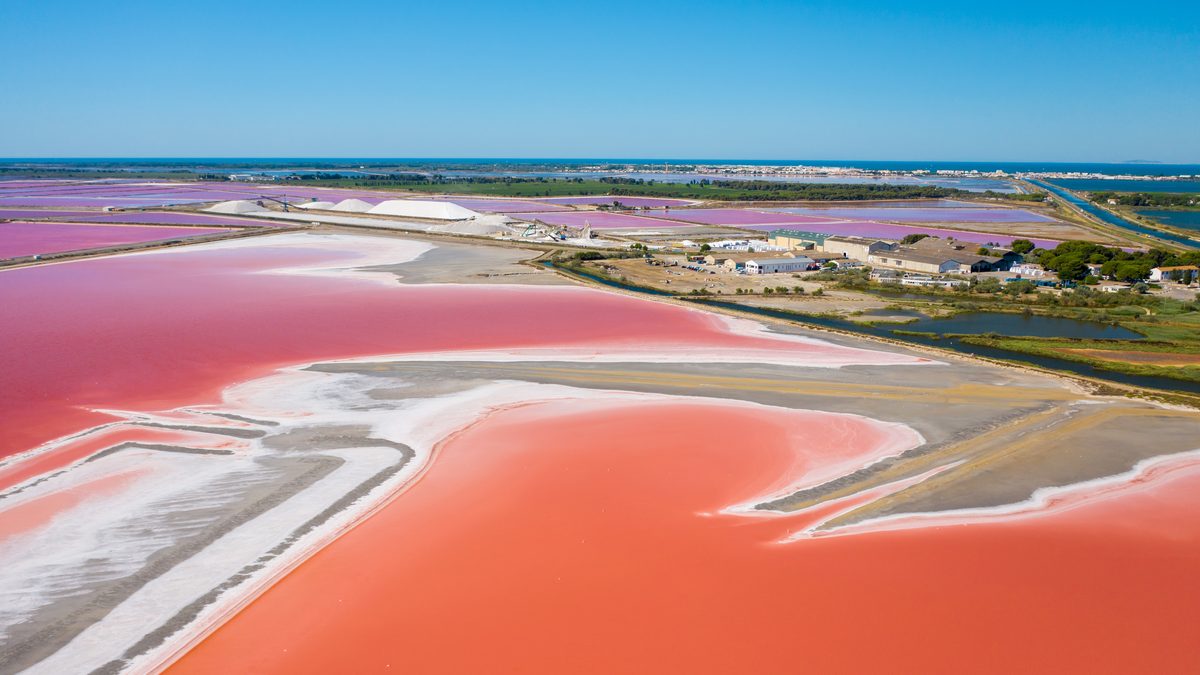
Salt is produced around the lake by solar evaporation. Our guide to what solar salt is explains how.
Rock salt deposits
MTA lists Çankırı, Nevşehir-Gülşehir and Yozgat-Sekili among the main rock salt deposits.
Seawater salt works at Çamaltı (İzmir) and Ayvalık (Balıkesir) and Lakes Seyfe and Palas complete the picture.
Mutlucan mines rock salt at Mucur, Kırşehir, where our refined (vacuum) salt plants also operate.
Rock salt is ancient sea salt, laid down when prehistoric seas evaporated and later buried.
Mutlucan Tuz at a glance: a Turkish salt producer
Mutlucan Tuz A.Ş. is a family company within Mutlu Group. We have produced salt since 2006.
We are one of the largest salt producers in Türkiye and among the world’s notable salt producers.
We run solar lake salt and rock salt production under one roof, with vacuum salt refining alongside.
| Item | Detail |
|---|---|
| Lake salt | Kayacık salt works, Lake Tuz, Şereflikoçhisar, Ankara |
| Rock and vacuum salt | Rock salt mine and refining plants, Mucur, Kırşehir |
| Raw lake salt | Over 1.5 million tonnes a year |
| Raw rock salt | Over 500,000 tonnes a year |
| Pond area | 10.7 million m² |
| Exports | More than 40 countries in Europe, Asia and Africa |
| Brands | Mutlucan; Parla and Ahu for refined salt |
| Environment | Zero Waste project participant |
At Lake Tuz we leave the lake’s natural salt crust untouched. We produce in purpose-built ponds instead.
Our sustainability page covers this approach and our Zero Waste work.
Our laboratories run continuous checks, and our analyses follow international standards.
Company history and structure are on our about us page.
For the short case, read why Mutlucan Tuz.
Export product range: raw, food, industrial, water treatment and road salt
Our product group spans five families, drawn from lake salt, rock salt and refined vacuum salt.
| Family | Products | Typical uses |
|---|---|---|
| Raw salt | Raw lake salt, raw rock salt, natural raw salt | Refining feedstock, chemical and leather industry, water softening, de-icing |
| Industrial salt | Industrial salt, washed salt, double-washed salt, refined industrial salt | Chemicals, textile dyeing, detergents, leather, dishwasher salt |
| Food salt | Food industry salt, iodised food industry salt, nitrite salt, table salt, coarse brine salt, refined food salt | Bakery, canning, ready meals, meat curing, pickles, cheese and olives |
| Water treatment salt | Water softening and conditioning salt, as tablets or granules | Regenerating ion-exchange resin in domestic, commercial and industrial softeners |
| Road salt | Road salt in bulk, big bags and sacks | Motorways, roads, pavements and industrial sites |
Bulk buyers often start with raw lake salt and then specify washing and grain size.
Raw rock salt from Mucur serves industrial processing, de-icing, chemicals and water conditioning.
Refined vacuum salt, including PDV salt and softener tablets, is produced under our Parla and Ahu brands.
Quality management and certificates
Buyers usually screen salt manufacturers on certificates first. Ours cover:
- ISO 9001: quality management
- ISO 22000: food safety management
- ISO 14001: environmental management
- ISO 45001:2018: occupational health and safety management
- TS 13001: Turkish HACCP standard certificate
Refined salt under the Parla and Ahu brands is produced with ISO, HACCP and SEDEX certification.
Current copies are on our certificates page. Ask for fresh copies with each tender, as certificates renew.
For food salt, the Codex standard CXS 150-1985 sets a minimum of 97% NaCl on a dry basis, excluding additives.
A certificate describes the system. The certificate of analysis, covered below, describes the actual lot.
A useful certificate of analysis shows, for each lot:
- NaCl content on a dry basis
- moisture and water-insoluble matter
- calcium, magnesium and sulphate
- grain size distribution
- for food salt, contaminants such as heavy metals, and iodine content where the salt is iodised
Packaging options
Packaging follows grade, volume and destination. It also protects quality on the way.
Salt starts to absorb water above about 75% relative humidity (EGTOP, 2021), so packing and storage matter.
| Format | Typical products | Notes |
|---|---|---|
| Loose bulk | Raw lake salt, raw rock salt, road salt, industrial salt | For vessel loads; needs covered storage at the receiving end |
| Big bags (FIBC) | Industrial, washed, food industry and road salt | Easy site handling with a forklift or crane |
| Sacks and bags | Road salt, food industry salt, water softening salt | For smaller users and distribution |
| Tablets and granules | Water softening salt | Packed for commercial and domestic softeners |
| Consumer packs | Table salt, iodised table salt, grinder jars | Packets and jars for retail supply |
Bag sizes, pallet patterns and labelling are agreed per order.
Tell us your handling equipment and storage conditions, and we match the format to them.
Shipping and Incoterms (general explainer)
Salt moves in three main ways. The right one depends on volume, grade and the receiving site.
- Bulk vessel: loose salt loaded straight into the hold. Suits large, regular volumes of raw, industrial and road salt, where the receiving port has storage.
- Big bags or bags as general cargo: smaller parcels, mixed grades, or sites without bulk handling.
- Containers: packed salt in standard shipping containers, suited to food, water treatment and refined grades and to inland delivery.
Incoterms are International Chamber of Commerce (ICC) rules that split costs, risk and tasks between the parties.
The current edition is Incoterms 2020. Four of its 11 rules are for sea and inland waterway transport only.
Those four are FAS, FOB, CFR and CIF. The other seven, EXW, FCA, CPT, CIP, DAP, DPU and DDP, suit any mode.
| Rule | Delivery and risk transfer | Common fit for salt |
|---|---|---|
| FOB (Free On Board) | When goods are on board the vessel at the port of shipment | Bulk vessel cargo where the buyer books the ship |
| CFR (Cost and Freight) | On board at the port of shipment; seller pays freight to the destination port | Bulk or general cargo where the seller books freight |
| CIF (Cost, Insurance and Freight) | As CFR, plus the seller buys minimum cargo insurance | As CFR, when the buyer wants insurance arranged |
| FCA (Free Carrier) | When goods are handed to the buyer’s carrier, for example at a container terminal | Containerised salt |
| CPT / CIP | Handed to the first carrier; seller pays carriage, and CIP adds insurance | Containers to inland destinations |
| DAP (Delivered at Place) | At the named destination, ready for unloading | Delivered supply where the seller manages transport |
ICC guidance says FAS and FOB suit bulk cargo loaded straight onto the ship.
When containers are handed over at a terminal, FCA is usually the more appropriate rule.
Always name the place precisely, for example “FOB named port, Incoterms 2020”.
The rule, port and delivery window for your order are agreed in each contract.
Seasonal grades need planning. Road salt buyers usually contract before winter, when demand peaks.
At the receiving end, keep salt covered and dry. Loose bulk needs a roofed store or a sheeted pile.
Import documents: certificate of analysis, certificate of origin and others
A salt shipment travels with commercial, transport and quality documents. Requirements vary by country and product.
- Commercial invoice and packing list: value, quantities, packing and marks.
- Bill of lading: the carrier’s receipt and title document for sea freight.
- Certificate of analysis (COA): laboratory results for the lot, such as NaCl, moisture, insolubles and grain size.
- Certificate of origin: confirms that the goods originate in Türkiye; normally issued through a chamber of commerce.
- A.TR movement certificate: for EU destinations, proves free-circulation status under the EU–Türkiye customs union, which covers industrial products.
- Declaration on origin for the UK: under the UK–Türkiye trade agreement, preferential tariffs rest on a declaration on origin made out by the exporter.
- ISO and food safety certificates: copies for supplier approval.
- Safety data sheet (SDS): handling, storage and transport information, often requested during supplier approval.
Salt falls under HS heading 2501 in the customs tariff.
Your customs broker confirms the full code and whether an A.TR or another document applies.
Food-grade salt may need extra food safety documents in some importing countries.
For a document checklist for industrial users, see our industrial salt buyer’s guide.
How to request a quote
A precise enquiry gets a precise offer. Include these six points:
- Application: what the salt is for, such as softener regeneration, de-icing, food processing or chemical use.
- Grade and specification: NaCl on a dry basis, moisture, insolubles, grain size and any additive, such as iodine or an anti-caking agent.
- Volume and frequency: annual tonnage, call-off pattern and season.
- Packaging: loose bulk, big bags, sacks, tablets or consumer packs, plus labelling needs.
- Destination and delivery term: receiving port or site and your preferred Incoterms rule.
- Documents: COA, origin document, certificates, SDS and any buyer-specific forms.
We reply with a matching specification and an offer based on these details.
FAQ
Which regions does Mutlucan Tuz export to?
We export to more than 40 countries across Europe, Asia and Africa. Our main markets include Russia, Romania, Bulgaria, Georgia, the United Kingdom, Switzerland, the Netherlands, Denmark, Germany and Belgium.
Which Incoterms are commonly used for salt shipments?
For bulk vessel cargo, FOB, CFR and CIF under Incoterms 2020 are common, because the salt is loaded straight on board. For containers handed over at a terminal, ICC guidance points to FCA instead, or CPT or CIP where the seller pays carriage. Delivered terms such as DAP suit buyers who want the seller to manage transport. The rule is agreed in each contract.
What packaging is available for export?
Loose bulk for vessel loads, big bags, sacks and bags, tablets and granules for water softening, and consumer packs for table salt. The right format depends on the product and on your handling equipment. Bag sizes and labelling are agreed per order.
Which documents accompany a salt shipment?
Usually a commercial invoice, packing list, bill of lading, certificate of analysis and certificate of origin. EU shipments may also need an A.TR movement certificate, and UK shipments a declaration on origin to claim preferential tariffs. Buyers often ask for ISO certificates and a safety data sheet as well.
Request a quote for salt from Türkiye
Send us your application, specification, volume and destination, and our export team will reply. Contact us.

