


What Is Lake Salt? How Does It Differ from Rock Salt?
Lake salt is a type of salt obtained through natural evaporation and has properties that differ from rock salt.
What Is Lake Salt?
The Formation Process of Lake Salt
Lake salt is a natural type of salt formed over time through the evaporation of lakes with high salt content. This process is entirely dependent on natural conditions and is often the result of geological cycles spanning thousands of years. Sodium chloride and other minerals dissolved in salty lake water begin to crystallize as the water evaporates under the effects of temperature and wind. As the water volume decreases, the minerals become concentrated and white salt layers form on the lake bed. Over time, these layers thicken and create extensive salt fields.
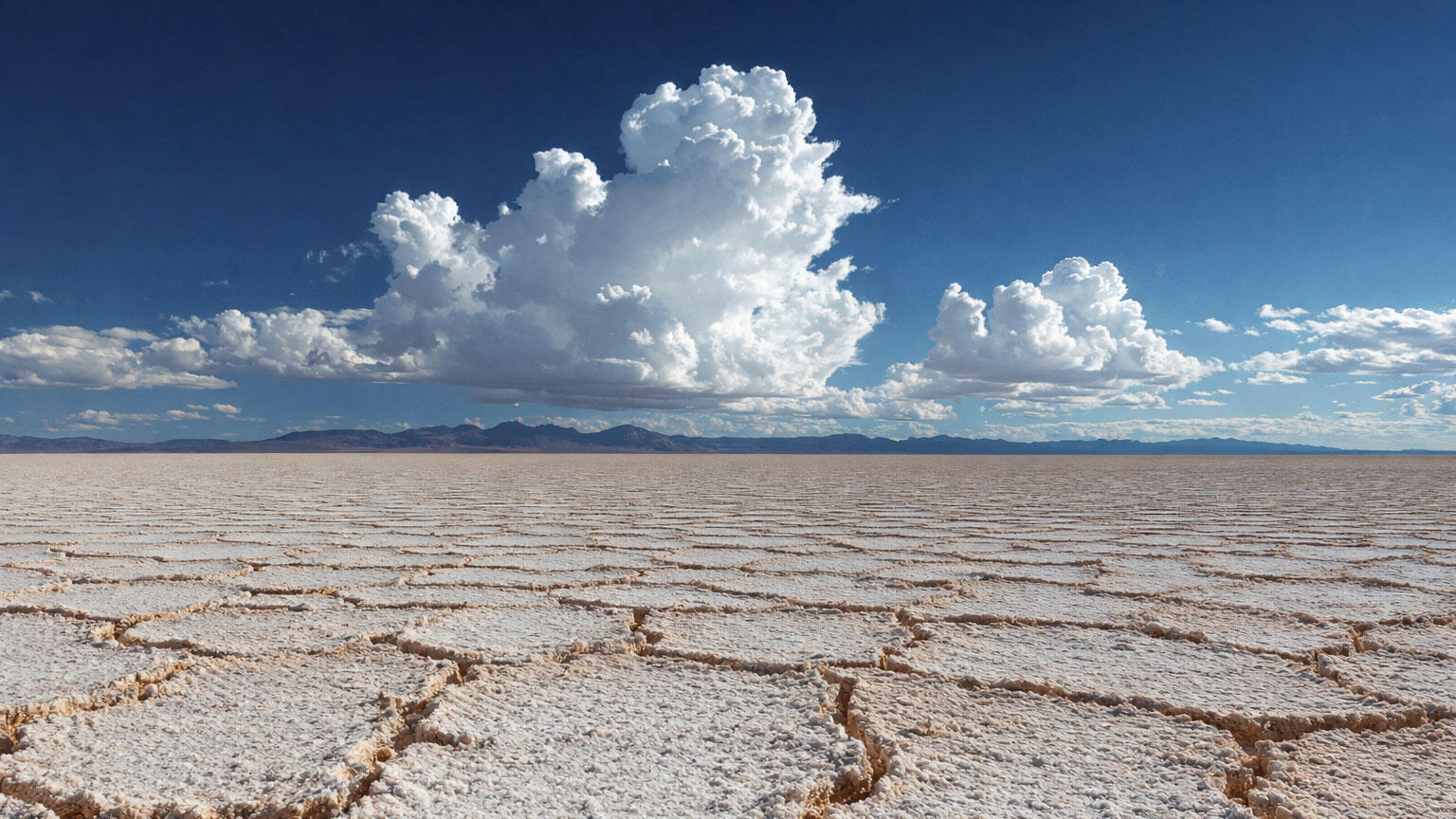
In arid-climate regions, this process happens much faster. During the summer months, sunlight and high temperatures evaporate a significant portion of the lake water. The remaining mineral concentration forms crystalline salt layers. This is clearly visible especially in semi-arid regions like Central Anatolia. The salt layers that form on the lake surface can span kilometers in width.
Lake salt production is mostly carried out using a natural harvesting method. Once the water recedes, the resulting salt layers are scraped from the surface and collected. These salts are then dried and, if needed, put through sieving. This production method is why lake salt is considered one of the least processed natural salts.
The Mineral Composition of Lake Salt
One of the most notable characteristics of lake salt is its mineral diversity. Although its main component is sodium chloride, lake salt can also contain varying proportions of magnesium, potassium, calcium, and various trace minerals. These minerals affect not only the salt’s chemical properties but also its taste, crystal structure, and color.
Because of the natural production process, lake salts can be used without refining, which preserves a significant portion of these minerals. This is why some lake salts can appear in gray, yellowish, or pink tones. The color of the salt actually offers clues about the geological structure of the lake it comes from.
Mineral concentration can vary from lake to lake, because each lake has a different water source, surrounding rock structure, and chemical composition. As a result, the mineral profiles of salts obtained from different lakes also differ from one another. This makes lake salt a type of salt that shows diversity in terms of natural minerals.
Where Lake Salt Is Produced in Türkiye
Türkiye has a geography quite rich in natural salt production. In particular, the Central Anatolia Region holds an important place in lake salt production due to its extensive salt lakes. Salt Lake is foremost among these lakes. Salt Lake is regarded as one of the largest salt reserves not only in Türkiye but in Europe as well.
When a large portion of the lake water evaporates during the summer months, thick salt layers form on the lake surface. These layers appear as vast white expanses and are collected and processed using traditional methods. Thousands of tons of salt are obtained from this region every year.
Other areas where lake salt production takes place in Türkiye include Lake Burdur and some smaller salt lakes. While these lakes don’t have as large a production capacity as Salt Lake, they provide significant production at a local scale.
What Is Rock Salt?
The Geological Formation of Rock Salt
Rock salt is a natural mineral salt extracted from salt deposits found beneath the earth’s crust. These salt deposits formed millions of years ago as a result of the evaporation of seas and saline water basins. In ancient times, some seas dried up, leaving behind thick layers of salt.
Over time, these salt layers became buried beneath layers of soil and rock. The resulting pressure and temperature changes caused these salt layers to develop a crystalline structure. This is how large salt reserves came into being.
Rock salt deposits are often found hundreds of meters underground. These reserves are geologically quite stable structures and can be extracted through mining operations for many years.
The Mineral Properties of Rock Salt
Rock salt is largely composed of sodium chloride. However, depending on the region where it formed, it can also contain different minerals. Minerals such as iron, potassium, magnesium, and calcium can affect the color and structure of rock salt.
For this reason, while some rock salts are entirely white, others can appear in pink, gray, or brown tones. Salts containing iron oxide in particular can appear pink.
Rock salt is generally extracted in large crystal pieces. It’s then crushed and ground to produce salt products of different sizes.
Extraction Methods for Rock Salt
Rock salt is generally extracted using underground mining methods. Galleries are dug in areas where salt deposits are found to reach the salt layers. Miners extract large blocks of salt through these galleries.
The extracted blocks are then transported to the surface and put through crushing, sieving, and cleaning processes. This produces salt sizes suitable for different uses.
In some regions, a dissolution method is used. In this method, water is injected into the underground salt layers to dissolve the salt, and the resulting brine is brought to the surface. This water is then evaporated to obtain crystalline salt.
Key Differences Between Lake Salt and Rock Salt
Difference in Formation Environment
The most important difference between lake salt and rock salt is the environment in which they form. Lake salt is obtained from surface-level salt lakes, while rock salt is extracted from underground salt deposits. This means the formation processes of the two salt types are entirely different.
Lake salt formation depends on natural processes such as sun, wind, and evaporation. Rock salt, on the other hand, is extracted through mining from geological layers that formed millions of years ago.
Difference in Mineral Content
Because lake salt is often affected by the surrounding natural water and mineral cycle, it can contain a wider variety of trace minerals. Rock salt, on the other hand, often contains purer sodium chloride.
This difference can affect the taste and use cases of the two salts.
Uses of Lake Salt
Use as Food and Table Salt
Lake salt is one of the natural salt types used in the food sector in many regions of the world. Its most common use is as table salt. Used to enhance the flavor of food, salt is regarded as one of the fundamental components of any kitchen. Because lake salt is obtained through natural production methods in particular, some consumers prefer it as an alternative to refined salts.
Lake salt can be used in various ways during cooking. Salt plays a flavor-balancing role in preparing soups, meat dishes, vegetable dishes, and sauces. In some kitchens, coarse-crystal salts are also added as a finishing touch on top of dishes. This method is particularly favored in restaurant kitchens and gourmet cooking.
Lake salt also holds an important place in pickle and brine production. The salty water mixture used in pickle-making helps vegetables stay preserved for a long time without spoiling. Similarly, salty brining methods are used in the production of olives, cheese, and certain meat products. In these processes, salt not only adds flavor but also contributes to preserving the food.
Lake salt is also quite commonly used in home kitchens. Consumers oriented toward natural products, in particular, may prefer minimally processed types of salt. This is why lake salt holds an important place both in home use and food production.
Industrial and Traditional Uses
Lake salt isn’t only a product used in kitchens. Throughout history, it has also played an important role in various sectors and traditional production methods. In earlier times especially, salt was used as one of the fundamental elements of food preservation methods. In periods when refrigeration technology wasn’t widespread, salt allowed foods like meat and fish to be preserved for longer periods.
In some regions, lake salt is also used in leather processing. The salting method is applied to prevent raw hides from spoiling before processing. Salt helps reduce moisture in the hide and slows bacterial decay. That’s why salt is regarded as an important material in traditional leather processing methods.
Beyond this, lake salt can also be used in certain traditional production processes. For example, in some regions, salt is used in cheese production to increase the product’s durability and support flavor development. Similarly, salt plays an important role in certain food preservation methods.
On an industrial scale, salt can be used as a raw material in various production processes. In the chemical sector, certain compounds derived from salt are used in the production of various industrial products. For this reason, lake salt is seen not merely as a food product but also as a natural resource that can be leveraged across different sectors.
Uses of Rock Salt
Use in the Food Sector
Rock salt has a quite wide range of uses in the food sector. Extracted from underground in blocks, rock salt is put through crushing and grinding processes at production facilities to be turned into salt products of different sizes. Through this process, coarse-crystal salt can be turned into finely ground table salt. Food producers use rock salt especially in processes such as brining, pickle production, cheesemaking, and preserving meat products.
One of the important reasons rock salt is preferred is that it’s a natural mineral resource. Undergoing less processing compared to refined salts leads some producers to prefer this salt. Also, because rock salt has a large crystal structure, it can be ground and used at different salt sizes. This provides flexibility in food production.
In cheese production, salt increases the product’s durability while also contributing to flavor development. Similarly, in brined products, salt helps preserve the food. Rock salt plays an important role in these processes. Rock salt is also frequently preferred in pickle-making to create the salty water mixture.
In conclusion, rock salt is an important natural salt resource used both in home kitchens and in industrial food production.
Use in Industry and Road Salting
One of the most common uses of rock salt is in the industrial sector. Salt is used as an important raw material in many production processes, particularly in the chemical industry. Sodium chloride is one of the fundamental components in the production of various chemical compounds. For this reason, large-scale industrial facilities regard rock salt as an important resource.
Salt is also utilized in textile production, leather processing, and certain non-food production processes. In the leather sector especially, salt helps preserve raw hides without spoilage. This ensures that raw materials are preserved throughout the production process.
One of the best-known uses of rock salt is road salting during the winter months. In cold climates, icy roads can cause serious safety issues. For this reason, municipalities and highway crews spread salt on roads to prevent icing.
Salt lowers the melting temperature of ice, causing the ice on the surface to melt. This allows vehicles to travel more safely on the road. Because rock salt can be produced in large quantities and is cost-effective, it’s one of the most frequently used salt types in road salting operations.
Which Salt Is More Natural?
The Difference Between Refined Salt and Natural Salt
The main difference between refined salt and natural salt emerges in the production process. Refined salt is generally purified through industrial processing. In this process, the salt is dried at high temperatures, foreign substances are separated out, and the salt is turned into a structure that consists almost entirely of sodium chloride. During this process, some of the natural minerals present in the salt can also be removed.
Certain additives may then be added to the refined salt. For example, iodine is added to table salt in many countries. The purpose of this is to prevent iodine deficiency in the population. However, this process can alter the salt’s natural mineral composition.
Natural salts, on the other hand, generally undergo less processing. Lake salt and rock salt fall into this category. These salts are often only put through simple processes such as drying, sieving, and crushing. As a result, they can continue to contain natural minerals.
However, the mineral ratio of natural salts varies depending on their source. Not every natural salt has the same mineral content. For this reason, the characteristics of natural salts can differ depending on the region where they were produced.
Should You Choose Lake Salt or Rock Salt?
Choosing between lake salt and rock salt often depends on the intended use. Both types of salt are obtained from natural sources and have different production processes. Lake salt is obtained from surface-level salt lakes, while rock salt is extracted through mining from underground salt deposits. This is why the physical structures and uses of the two salt types can differ from one another.
From a culinary standpoint, both lake salt and rock salt can be preferred. Some people prefer the finer crystal structure of lake salt, while others prefer using the coarser crystal structure of rock salt. Ground rock salt can also be used as table salt.
When it comes to industrial use, rock salt is more commonly preferred. This is because underground reserves are large and high volumes can be produced through mining.
In conclusion, it wouldn’t be accurate to claim a definitive superiority between lake salt and rock salt. Both types of salt are obtained from natural sources and can offer different advantages depending on the intended use.
Rock salt in particular is widely used to prevent roads from icing during the winter months.
Which Salt Is More Natural?
The Difference Between Refined Salt and Natural Salt
Refined salt goes through various processes during production, and in most cases, a portion of its natural minerals is removed.
Should You Choose Lake Salt or Rock Salt?
Both types of salt are obtained from natural sources. The choice usually depends on the intended use.
Quick Summary on Lake Salt
In short, accurate information and reliable production quality matter when it comes to lake salt. For more information, you can check out Salt Lake (Wikipedia), and browse our Product Group page to see all of our products.


Post a comment